Q2 summary: 153 TikToks, $146, and why I'm pivoting
Doubled down on short-form marketing. Did it pay off?
At the end of March my app onboarding had a decent conversion, so I decided to double down on marketing on TikTok. I posted 153 times till mid-May. The volume was there, but none of my posts went viral (no content-market fit), so I decided to stop.
I'm happy I gave it a try - I've built a useful TikTok automation (which I'll use in the future), and I had my best quarter so far, reaching $146 revenue (still far from where I wanna be though). Today my app has 5 active subscribers.
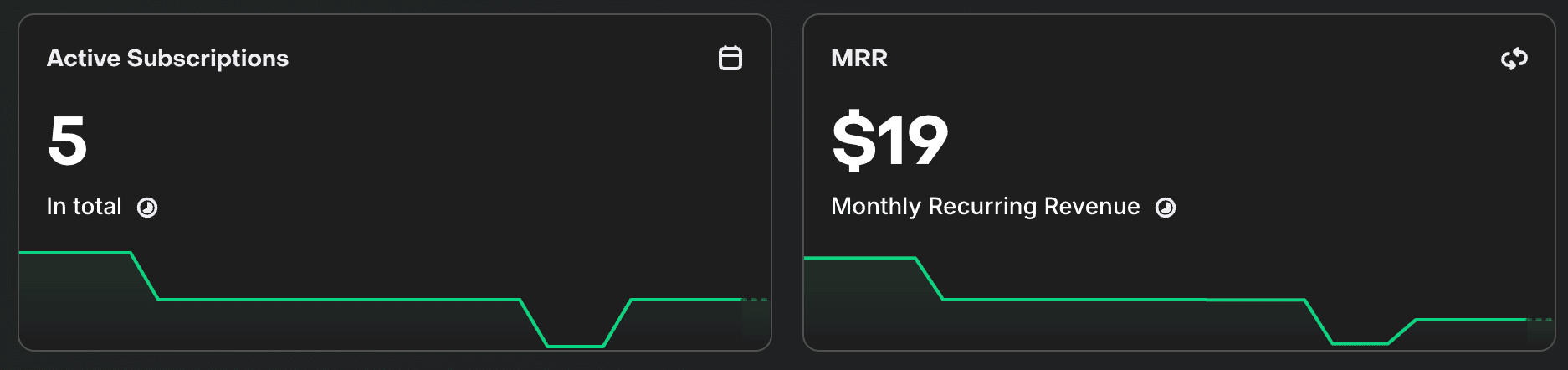
TLDR: main metrics
| Metric | Q2 (Apr–Jun) | Q1 (Jan–Mar) |
|---|---|---|
| Revenue | $146 | $86 |
| Downloads | 263 | 580 |
| TikTok views | 161K | 225K |
| Posts / accounts | 153 / 4 | 51 / 1 |
| Trials → new subs | 13 → 6 | 15 → 4 |
| Active subs (end of quarter) | 5 | 4 |
Built a custom Claude Code harness to mass-produce TikToks
In May I posted from 4 different TikTok accounts. To make it efficient, I built a custom harness for Claude Code which includes:
- 14 Claude Code skills
- A Next.js app to render the data and videos (think canvas for the agent)
- Local database
Virality Lab is an agentic loop that runs on the Claude subscription (no paid API required): it fetches competitor TikToks, forms format hypotheses per account, generates slideshow/video proposals, renders them, pushes to TikTok and tracks what performs.
It technically allows me to post 120 TikToks weekly in around 6 hours of work.
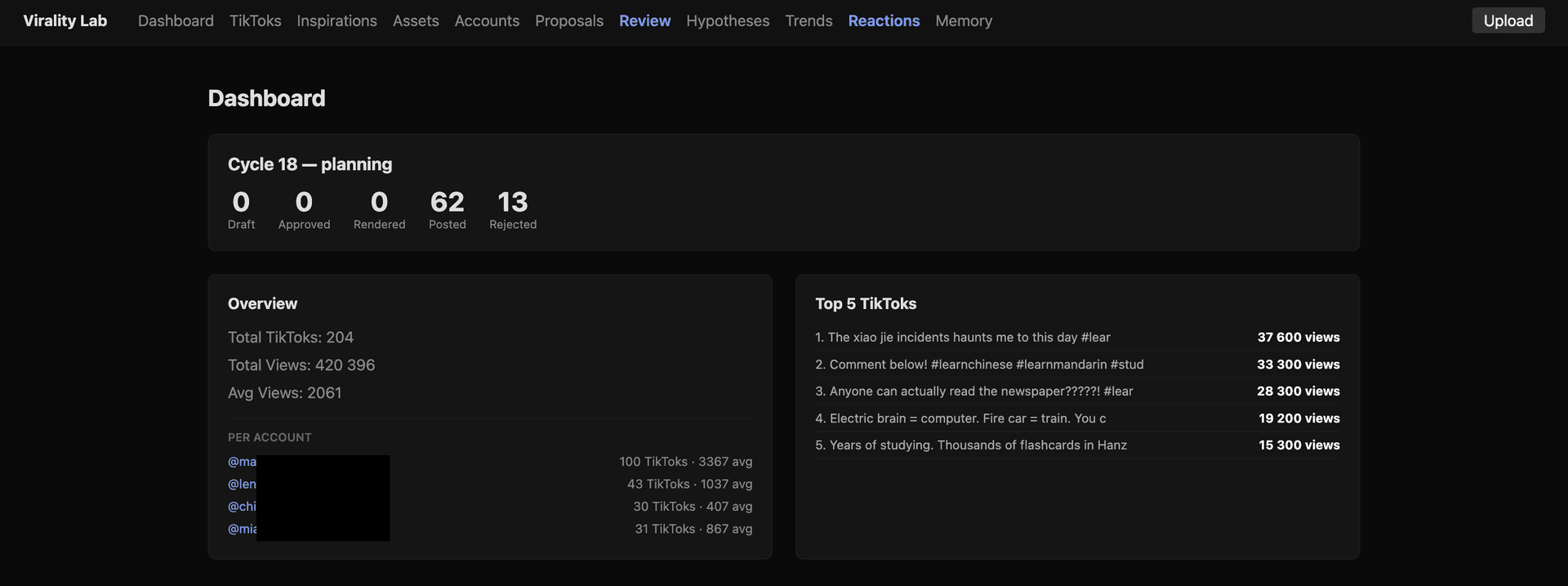
More numbers about marketing
I used 4 different TikTok accounts (two with the US VPN) and posted a maximum of 34 times per week.
I uploaded 153 posts, which generated 161K views (~1,050 views/post). The best one achieved only 8.5K (no viral hit).
Two honest takes:
- The volume was there but quality was slop. The tool was truly useful but I made my usual mistake: I built a complex system before figuring out how to go viral manually.
- Figuring out how to go viral on TikTok takes a lot of time. You should post a lot (20 times per week) and experiment with different content formats.
The app funnel: 161K views → $146
The app currently has a 5% download-to-trial conversion ratio which is a decent number for an education app with a soft paywall (according to RevenueCat reports). In total I had 13 new trials which turned into 6 new subs.
The onboarding is good enough and doesn't require any further work (also most new subs are yearly), so I decided to work on the next steps in the funnel: activation and retention.
Weak activation & retention
After I stopped posting mid-May I decided to focus on activation. I reworked the initial screen so that users use the core feature right after opening the app (zero friction). I also put a large app name on each screen so the app demo is more marketable (recognizable) in TikToks.
I always knew this wasn't the best app but I wanted to focus on marketing anyway. But after getting 800 downloads and seeing poor retention, I started using the app myself and (surprise surprise) it doesn't feel sticky. I also saw in the analytics that my power users are actually free, and the paying users don't use the app that much.
So I've decided to pivot and build a product that I wanna use too. I'll dogfood until it feels really sticky.
Learnings, and why I'm pivoting
- I figured out how to mass-produce TikToks at scale, on autopilot.
- Quantity is the lever but the content quality must be good. Good ASO or paid ads would have outperformed my TikToks (if my product had real usage and retention).
- I must make my product sticky first. Then I'll be able to run paid ads, get ASO users and double down on short-form content again.
Right now, I plan to build a new sticky product. I have a strong idea for AI agents for immersive language learning, and I'd love to build it with someone (I can do growth & product). If you want to team up, message me on LinkedIn!