2025 unwrapped: my (hard) lessons on indie hacking
One year ago, I started building my first SaaS and planned to reach $500 MRR by the end of the year. I honestly thought the goal was simple (that's what internet gurus tell you, isn't it?).
Hard truth: it is not simple.
In a year, I have probably made all mistakes I can imagine. Gave up on projects too early. Selected wrong marketing channels. Chased hype instead of value. Worked on projects I don't enjoy.
I may have spent around 700 hours, built 10 apps and earned $44. Money-wise, the ROI sucks, but after one year, I regret only one thing: not starting earlier.
Because in the last year:
- I learned a lot about coding, web and mobile development
- I learned a lot about building and marketing digital products (more on that below)
- I (with my team) placed 2nd at AI Tinkerers hackathon, got into final stage of 11labs x a16z hackathon, and won community award at PixelRiot hackathon
- I joined organizers crew of AI Tinkerers and co-organized first event in Wroclaw
TLDR on my main learnings
(It is possible they are only relevant to me)
-
Don't set yourself deadlines & goals (MRR, number of apps) because it puts pressure and leads to wrong decisions. Instead, have your strategy and build a habit to ship & market regularly.
-
Keep grinding, but make sure you are directionally right. Directionally right means that you are building something valuable. It sounds very obvious, but I have confused hype with value a few times this year.
-
In early stages don't focus on revenue. At the beginning, your only task is identify and ship value. Find something very cool that random people (not only your friends!) are becoming excited about.
-
Be emotionally stable and don't let dopamine guide you. Don't trust influencers (Starter Story, X accounts building in public) that it's easy to ship a profitable app. It is the opposite. Most of the showcased success stories are from people have been failing for years before making actual money. @levelsio failed 66 out of 70 projects.
-
Read 'The Mom Test' before you start building any B2B apps.
-
If you build B2C apps:
- You should know in advance how exactly you'll market it
- Don't reinvent the wheel - make sure similar apps that earn money
- For solo projects, the app should be simple and deterministic (no AI ambiguity) so are condifdent you'll deliver it
- Make sure you are excited about the project, you'll be proud to show it, and make sure it's meaningful (brings value)
I'll try to take these learnings into 2026 and see what time brings.
Projects I built in 2025
Here is a list of tools and apps that I built in 2025, why I built them, how I marketed them, and what each one taught me.
r/microstartup_ideas
A tool that helps discover micro SaaS ideas based on reddit conversations.
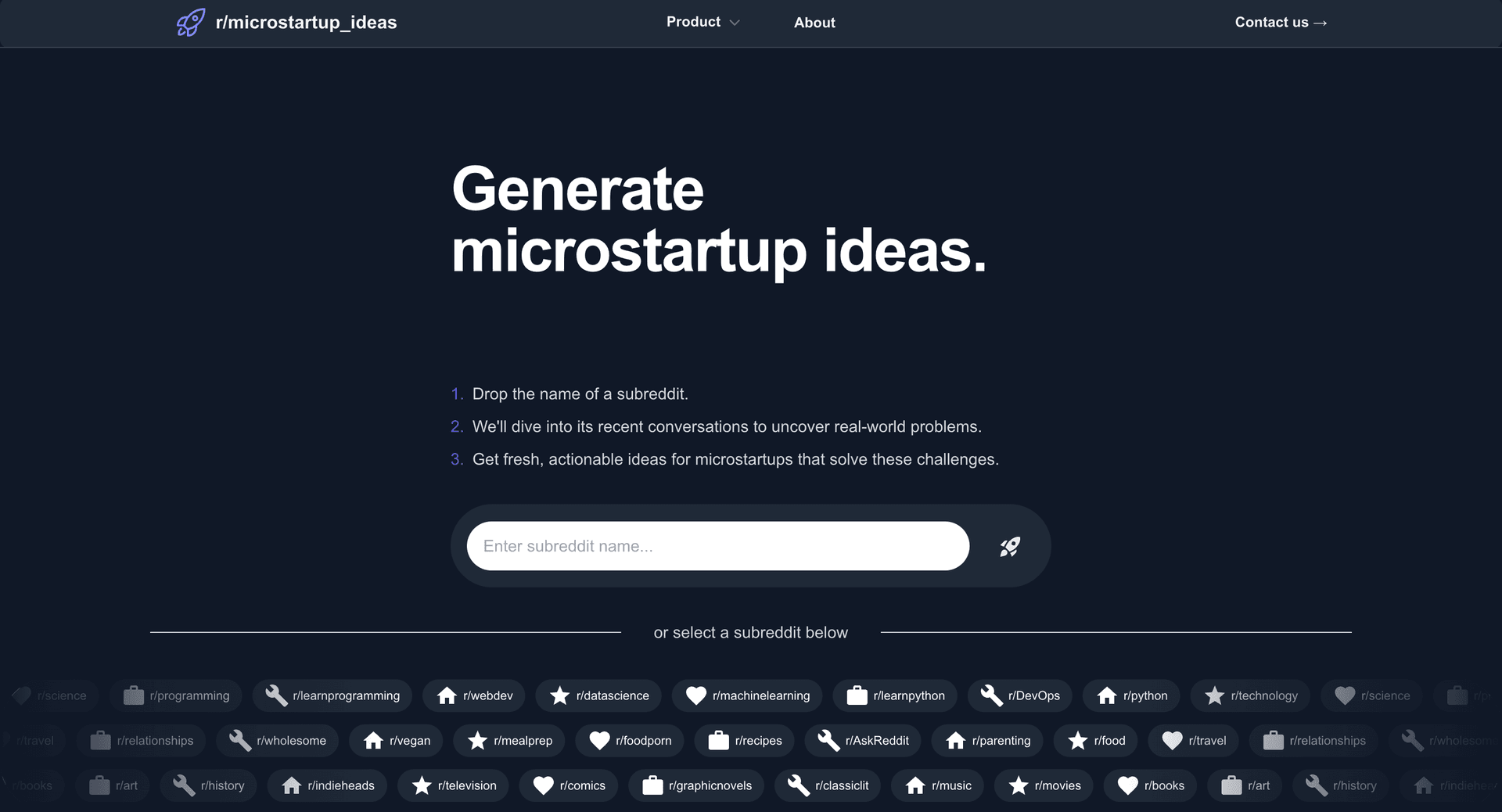
I built this tool because I got excited about the value of discussions on reddit. Shortly after building it, I dropped this project because I realized that monetizing insights based on reddit data does not comply with their policy.
This was my first frontend project ever and while building it, I read Next.JS & React docs, explored Cursor, and got familiar with Typescript and basics of web dev.
Hanzi Flow - web app
A tool that uses AI to turn any Chinese text into a text that you can read on your level.
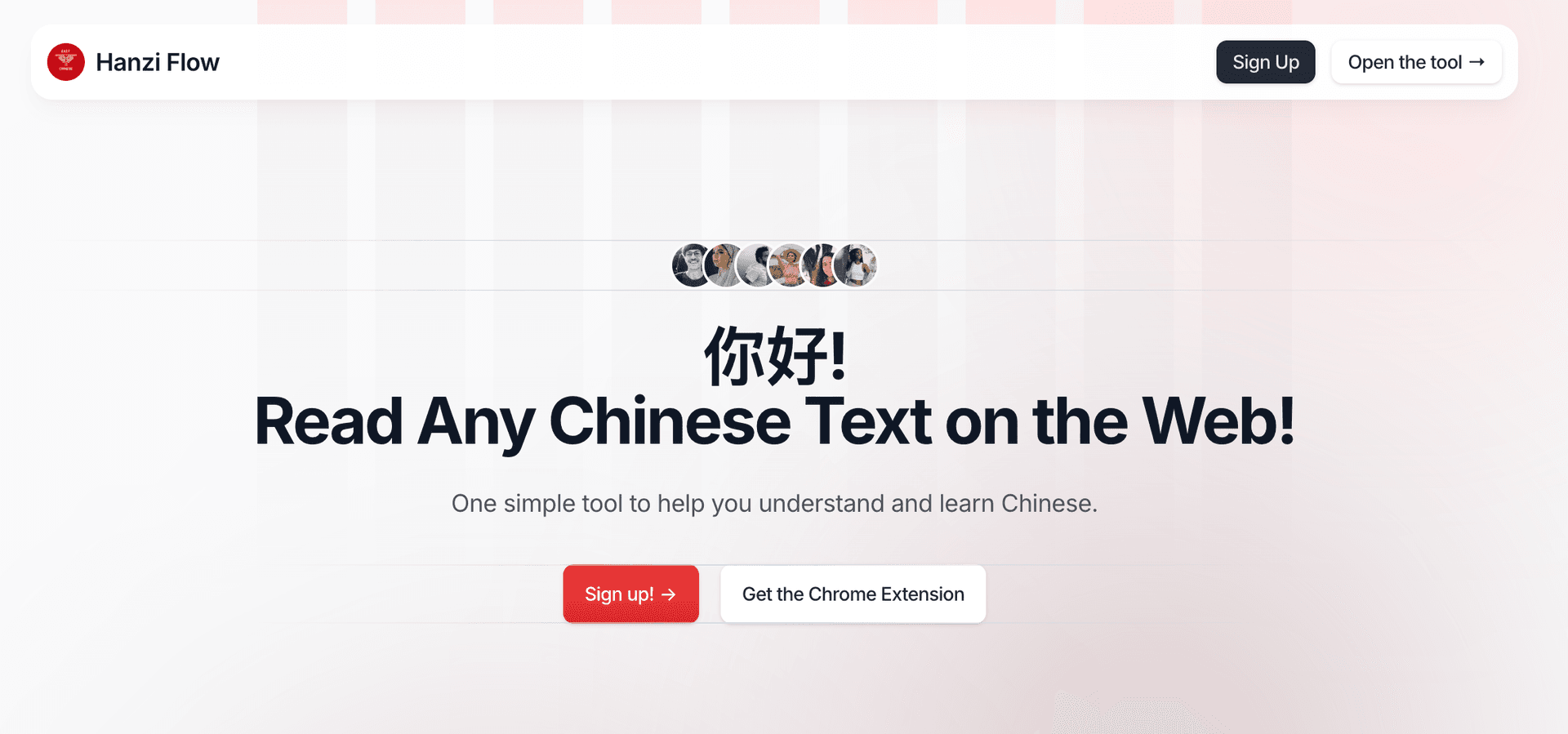
I came up with idea for Hanzi Flow during my visit to China in September 2024, and this app is actually the reason why I got into indie hacking.
From time perspective I can see that I had no idea how to market B2C app. I wrote a bunch of posts on Facebook, LinkedIn and Reddit and even planned to reach out to local university teachers.
During this project I discovered a world of indie hacking, reddit, X communities and learned a lot about web development (auth, stripe integration etc).
I'll revisit this idea in the future, but I'll start from scratch because this one isn't well built.
Hanzi Flow - chrome extension
A popup dictionary with contextual translations.
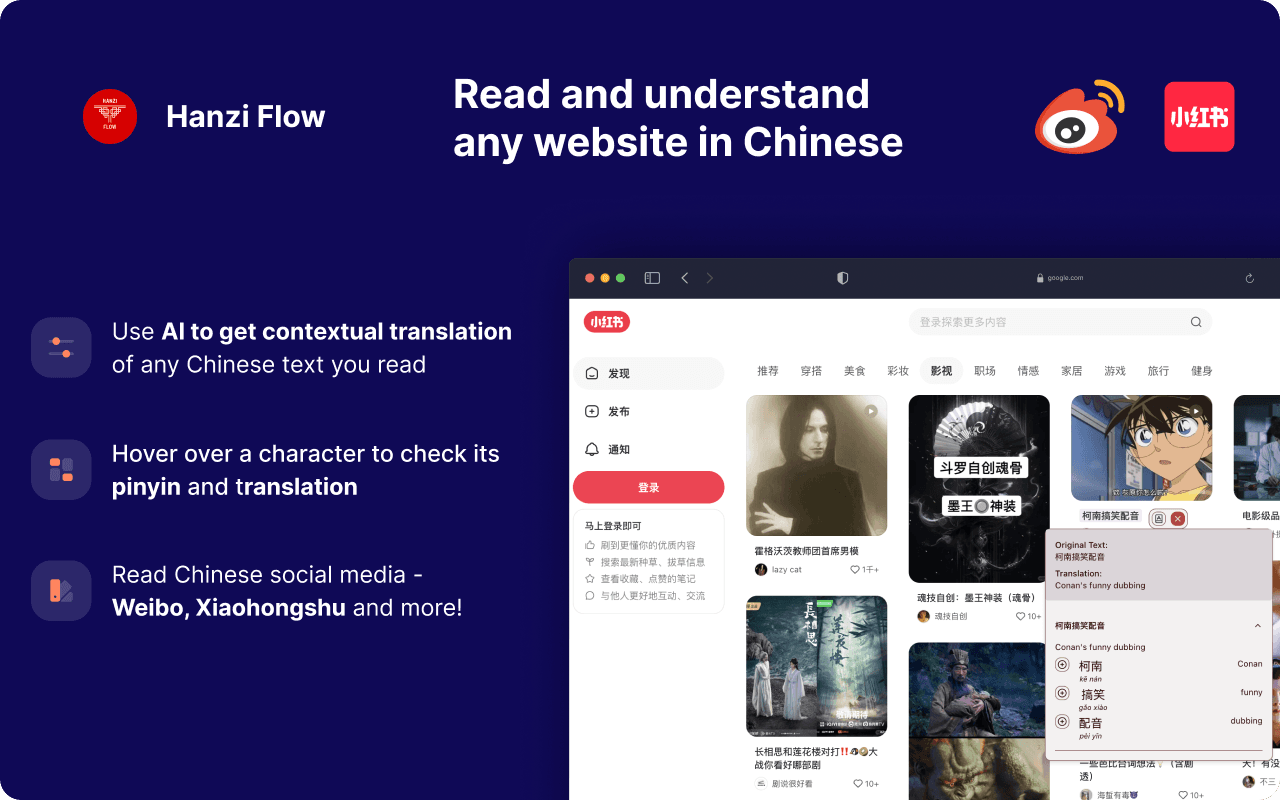
I started building Hanzi Flow Chrome extension, because I saw a successful launch of VocAdapt on Product Hunt and I thought it was cool (the tool doesn't exist anymore lol).
I didn't do a lot of marketing around it, but it's published in Chrome Web Store and has had about 50 active free users since then.
This project taught me how to build chrome extensions, I also learned a lot about UI libraries (shadcn in particular) and most importantly I understood that publishing into a store (chrome, appstore, whatever) guarantees some downloads (unlike web apps who may stay completely unvisited without marketing).
Ratatai
Hackathon project - voice AI cooking assistant.
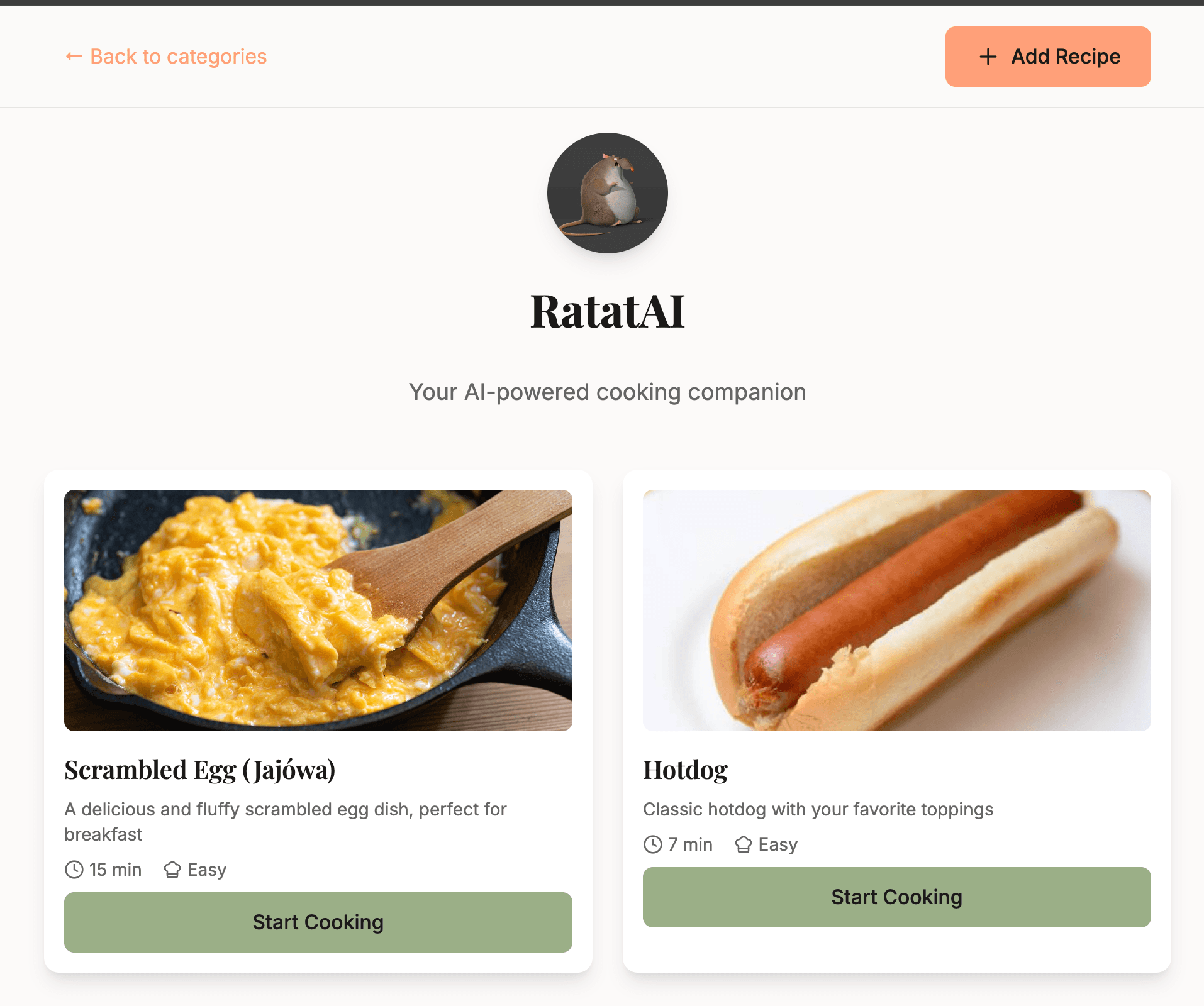
🔗 Ratatai
This is a project for ElevenLabs x a16z Worldwide Hackathon. After 10 hours of building, the app barely worked, but we recorded a great demo, and it got us into a final (top 8) in Warsaw.
We did not continue this project after a hackathon, but I learned that a great demo is more important than polished software. In other words, it is fully under your control how your work will be perceived by the audience.
I also explored a bunch of tools like Lovable, Replit etc.
Magiczny Rysunek
Web page turning children images into animated photos.
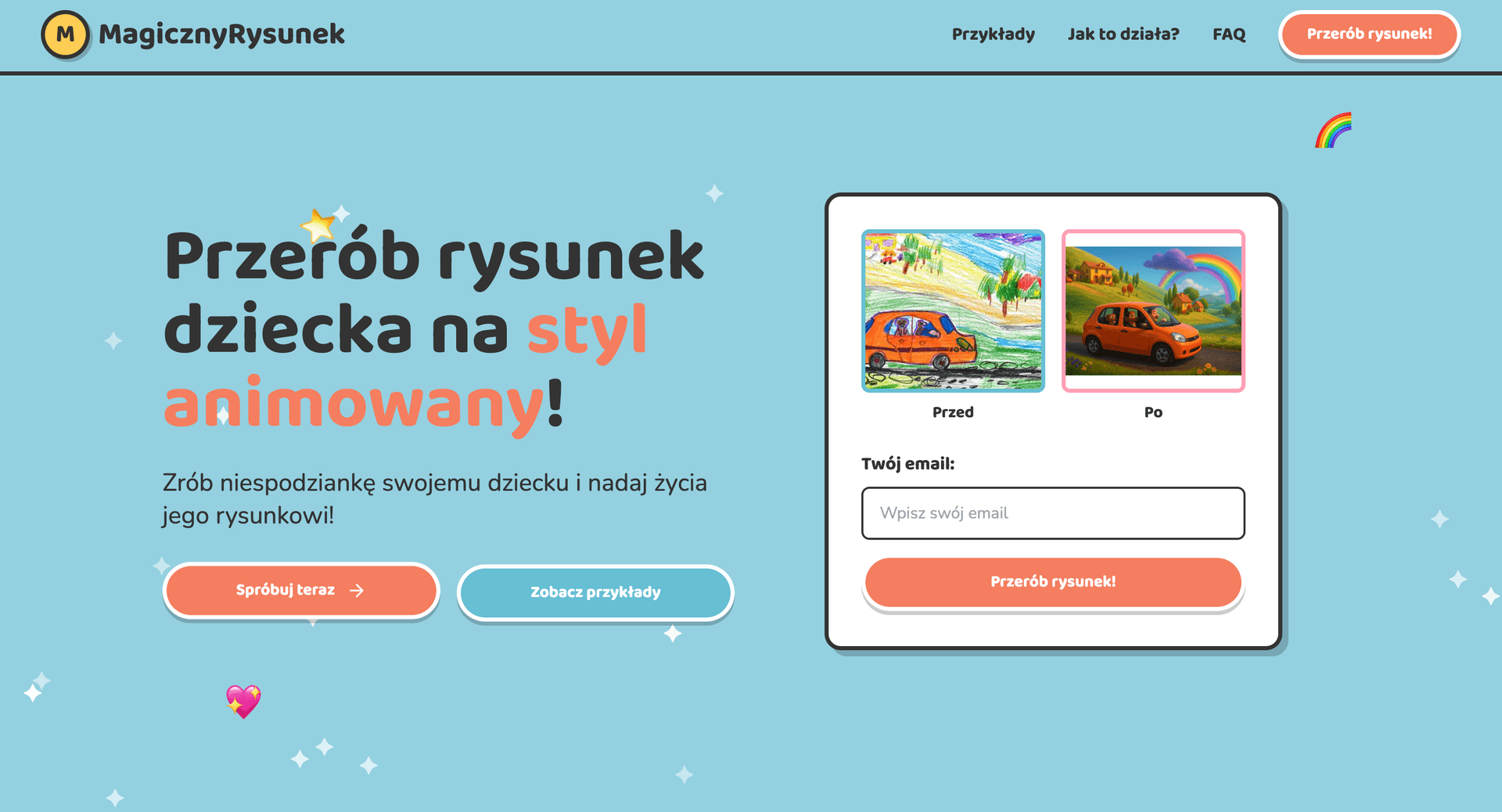
I started this project because I saw that @t31kx (X handle) earned a few thousand USD in a few days with a similar project.
I tried to market it with insta ads and facebook group, but didn't get any sale.
This taught me two things:
- I failed because I had no distribution (@t31kx did have; btw he had much better timing).
- I shouldn't follow things I am not passionate about (I think that in the long term it could be turned into a nice product, but I do not want to invest time in that).
Also, it was my first project with supabase (my current go to for backend infra) and I think it had a cool playful UI with neobrutalist style.
Lothtedious
Desktop agent that observes our work and proposes ready-to-deploy automation opportunities.
The most ambitious project this year that got us (I teamed up with two friends) 2nd place at AI Tinkerers PL.Kombinator hackathon. We only marketed it with a single reddit post, but it went semi viral - we got 20k website visits, 5k demo views and 600 waitlist signups.
We dropped it because the token costs were very high, and this project was very complex for a side project (would be great in full-time, VC-backed mode).
We got a super valuable mentoring from Grzegorz Kossakowski on how to turn messy software into a product and I learned that a product with AHA effect can really be self-marketable.
Also, it got me into AI Tinkerers organizing crew.
n8n RAG
Describe what you want to automate and we'll get you top matching n8n workflows.
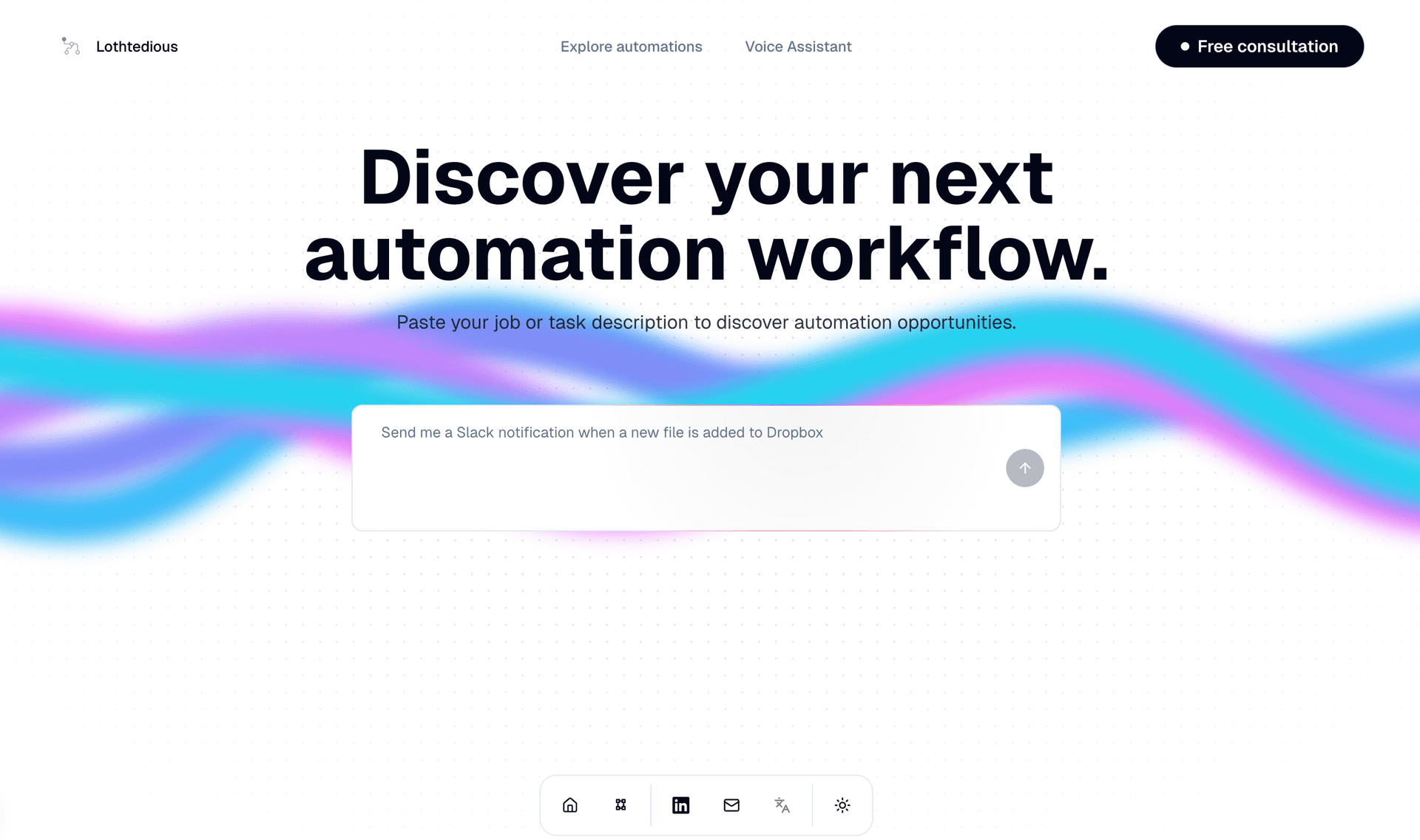
We enjoyed n8n quite a lot, and we saw a lot of hype around n8n workflows on LinkedIn, so we collected 3000 n8n workflows (all we could find in the internet) and built a RAG on them.
I tried to market it on reddit, but didn't see much interest.
During this project I learned a lot about UI libraries and cool components (I think it was first truly beautiful frontend I built) but most importantly I understood that all those posts on LinkedIn is just hype and marketing bullshit, and I should focus on delivering value instead of chasing hype (surprise, surprise!).
Automations and n8n workflows
I had an episode when I built n8n automations, mainly for GTM. I had a short consulting gig, and tried to scale it a bit, but wasn't successful at scaling.
I quit (maybe too early) because b2b sales and cold outreach isn't my thing. Now I would approach it differently, but tbh I enjoy building products more.
Anyway, it's cool I learned n8n and got to know Apify that lets to scrape pretty much any data out there.
Nail Guard
Mobile app helping people stop nail biting (lol).
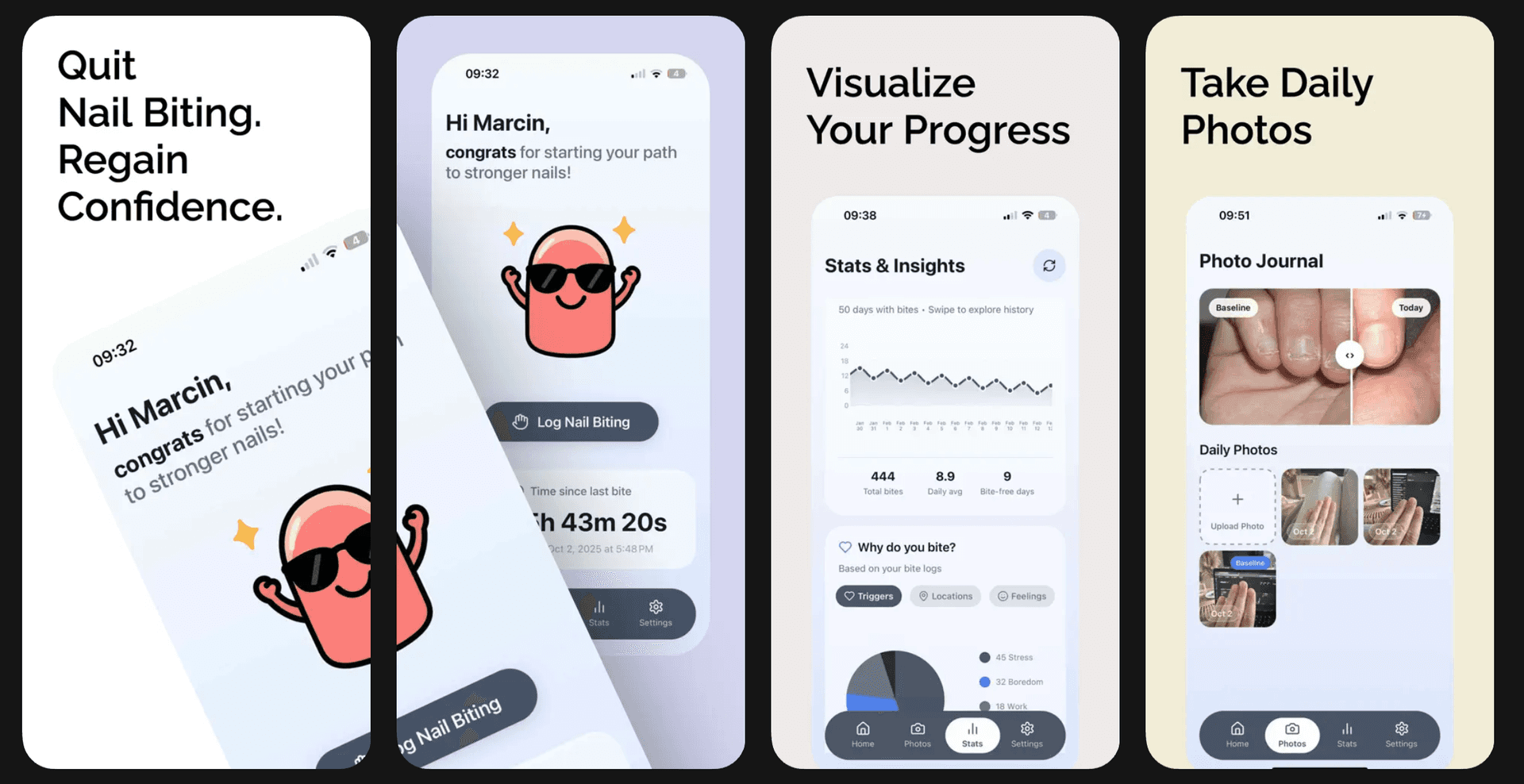
I saw a lot of hype (mainly X, but also starter story) about mobile apps like Cal AI or Puff Count. These apps: (1) help people stop bad habits (2) have a long onboarding (30+ screens) (3) app is very simple, with a daily loop (4) have hard paywall (5) are marketed on tiktok.
I decided to give it a try, my friend suggested to focus on nail biting, I did some research (how to market on tiktok), it seemed OK.
I earned $44 with this project (my first internet money lol).
This time I learned to build iOS apps with Expo and learned a bit about how solo founders run marketing on tiktok. But again, there is a bunch of hard learnings for me: (1) don't build around a problem that you don't care about (2) don't build projects you are not excited to show to others (3) don't build if you can't find ANY competitor earning money.
The app is still live but I stopped any further work on it.
Act Mate
Mobile app helping actors learn lines and record self tapes.
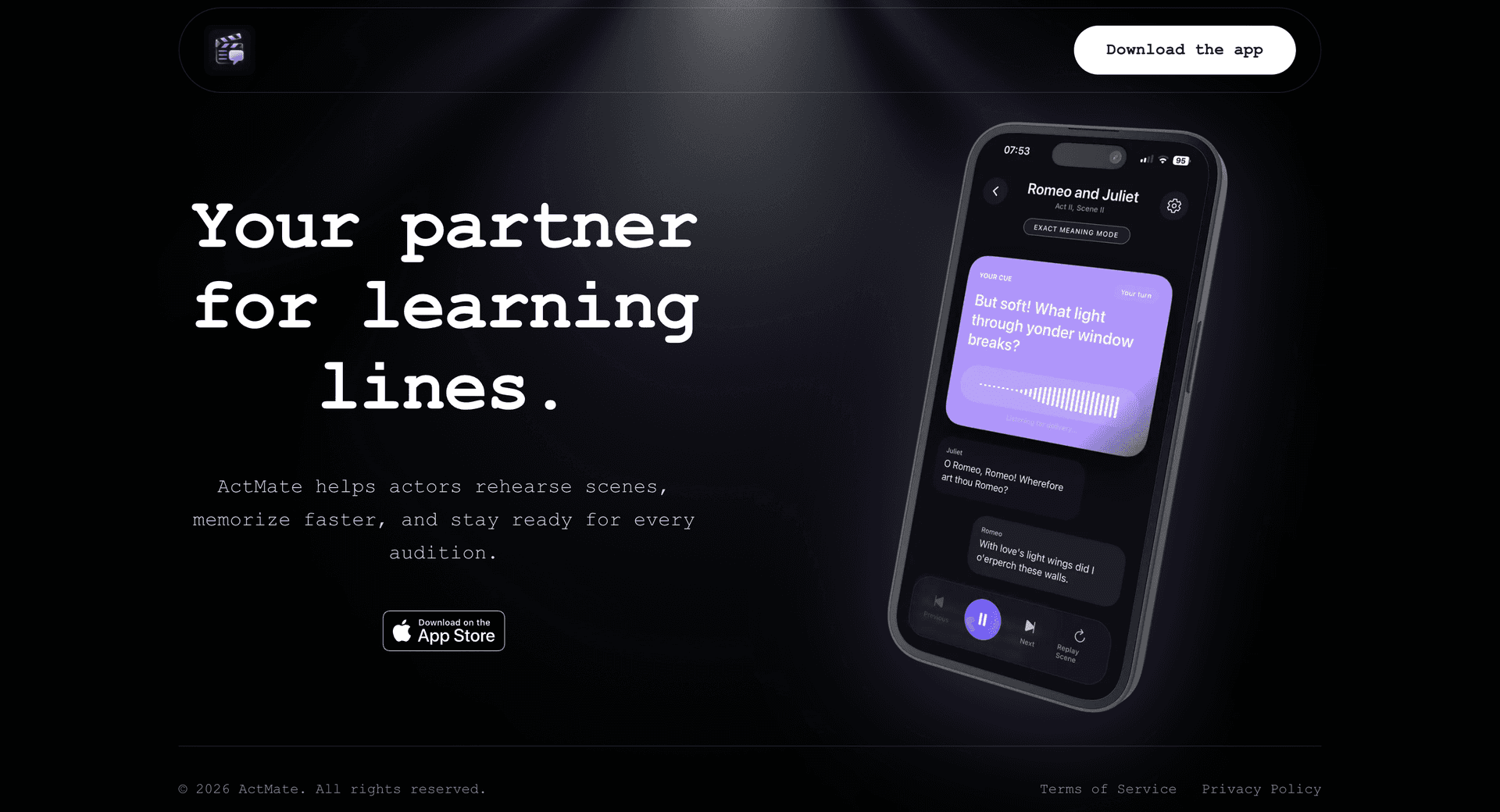
Started building the app on PixelRiot hackathon with my team (we won community award and lots of credits for AI tools with this app) and plan to release it early 2026.
This time the problem is relatively interesting and real (my brother is an actor), there are profitable competitors (e.g. Cold Read), we have a group of early adopters, and a clear plan for marketing (ASO, tiktok, Reddit, affiliates).
Time will show if I'm too optimistic again 🙂